Cloud Gaming Platforms in 2025: A Forecast of Innovation and Transformation
The cloud gaming industry is on the cusp of a revolution, poised to redefine how we access and experience video games. By 2025, cloud gaming platforms are projected to be more sophisticated, accessible, and deeply integrated into our entertainment ecosystem. This article explores the key trends, technological advancements, and competitive dynamics that will shape the landscape of cloud gaming platforms in the coming years.
Current State of Cloud Gaming
Before diving into the future, it’s essential to understand the present. Cloud gaming involves streaming games from remote servers directly to players’ devices, eliminating the need for expensive hardware or lengthy downloads. This technology has the potential to democratize gaming, allowing anyone with a stable internet connection to enjoy high-end titles on a variety of devices.
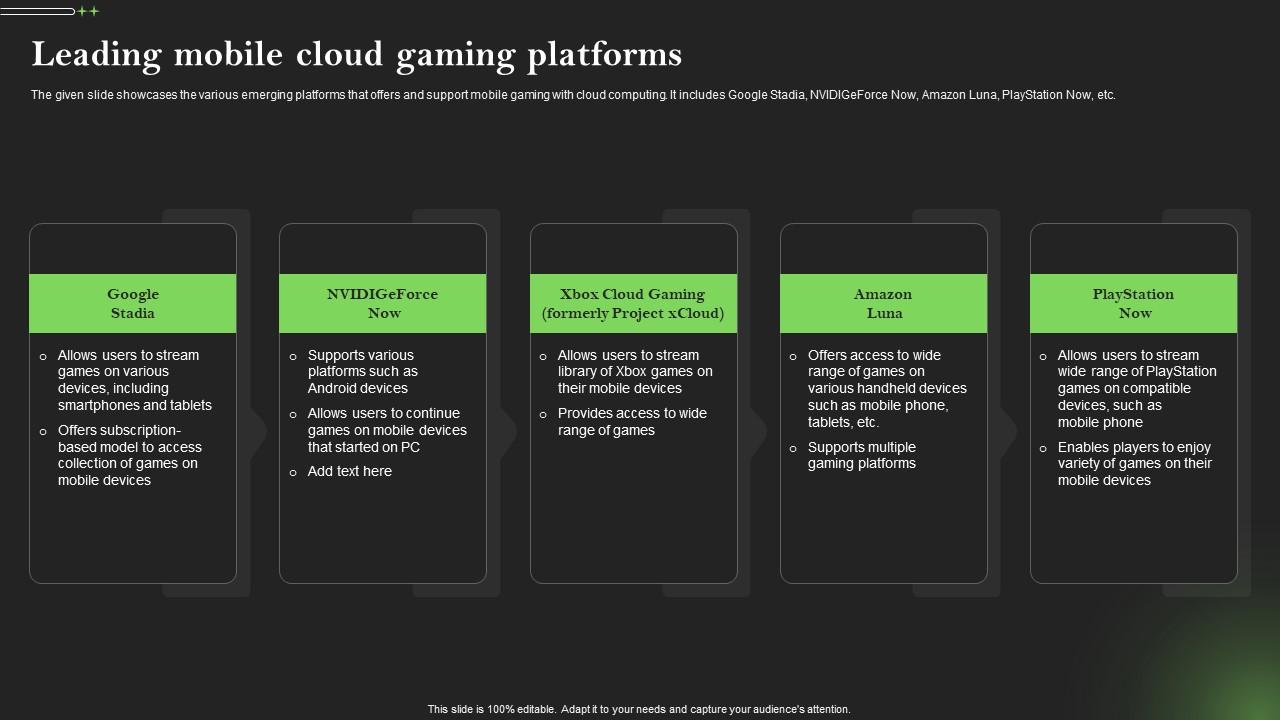
However, cloud gaming is still in its early stages. Current platforms like Xbox Cloud Gaming, NVIDIA GeForce NOW, and PlayStation Plus Premium offer a compelling glimpse of the future, but they also face challenges such as latency, content availability, and subscription costs. These challenges are being actively addressed by industry leaders, and significant progress is expected by 2025.
Key Trends Shaping Cloud Gaming in 2025
Several key trends will drive the evolution of cloud gaming platforms in the coming years:
-
Technological Advancements:
- 5G and Edge Computing: The rollout of 5G networks and the expansion of edge computing infrastructure will be critical for reducing latency and improving the overall streaming experience. Edge computing, which involves processing data closer to the user, will minimize the distance data needs to travel, resulting in faster response times and smoother gameplay.
- Improved Video Compression: Advancements in video compression technologies, such as AV1, will enable higher-quality streaming at lower bandwidths. This will make cloud gaming more accessible to players with limited internet speeds and reduce data costs.
- AI-Powered Optimization: Artificial intelligence (AI) will play an increasingly important role in optimizing cloud gaming performance. AI algorithms can dynamically adjust streaming quality based on network conditions, predict player behavior to pre-load assets, and even enhance graphics in real-time.
-
Content and Partnerships:
- Exclusive Cloud-Native Games: We can expect to see more games designed specifically for cloud gaming platforms. These games will take advantage of the unique capabilities of the cloud, such as massive multiplayer experiences, procedural generation, and AI-driven content.
- Strategic Partnerships: Cloud gaming platforms will continue to forge partnerships with game developers, hardware manufacturers, and telecommunications companies. These partnerships will be essential for securing exclusive content, optimizing performance, and expanding market reach.
- Integration with Subscription Services: Cloud gaming will become increasingly integrated with existing subscription services, such as Xbox Game Pass and PlayStation Plus. This will provide players with a more comprehensive and cost-effective way to access a wide range of games.
-
Accessibility and User Experience:
- Cross-Platform Compatibility: Cloud gaming platforms will strive for greater cross-platform compatibility, allowing players to seamlessly switch between devices, such as smartphones, tablets, PCs, and smart TVs.
- Improved User Interface: The user interface of cloud gaming platforms will become more intuitive and user-friendly, making it easier for players to discover and launch games.
- Social Features: Cloud gaming platforms will incorporate more social features, such as voice chat, shared game experiences, and competitive leaderboards, to foster a sense of community and engagement.
-
Emerging Technologies:
- VR and AR Integration: Cloud gaming could potentially unlock new possibilities for virtual reality (VR) and augmented reality (AR) gaming. By streaming VR/AR content from the cloud, players can enjoy immersive experiences without the need for expensive hardware.
- Blockchain and NFTs: Blockchain technology and non-fungible tokens (NFTs) could be integrated into cloud gaming platforms to create new forms of ownership, monetization, and player-driven content. For example, players could own and trade in-game assets as NFTs, or participate in decentralized game development.
Competitive Landscape in 2025
The cloud gaming market is expected to be highly competitive in 2025, with several major players vying for dominance:
- Microsoft (Xbox Cloud Gaming): Microsoft has a significant advantage in the cloud gaming space due to its extensive gaming ecosystem, including Xbox Game Pass, Xbox consoles, and a vast library of games. The company is likely to continue investing heavily in cloud gaming technology and content.
- NVIDIA (GeForce NOW): NVIDIA’s GeForce NOW platform leverages the company’s expertise in graphics processing and cloud infrastructure. GeForce NOW offers a flexible subscription model and supports a wide range of PC games.
- Sony (PlayStation Plus Premium): Sony’s PlayStation Plus Premium service includes cloud gaming capabilities, allowing players to stream PlayStation games on various devices. Sony is expected to expand its cloud gaming offerings and integrate them more closely with its PlayStation ecosystem.
- Amazon (Luna): Amazon’s Luna platform is integrated with its Prime subscription service and offers a selection of games through channels. Amazon’s cloud infrastructure and extensive customer base give it a strong position in the market.
- Google (Stadia): While Google’s Stadia service faced challenges, the company’s cloud technology and infrastructure remain valuable assets. Google may pivot to focus on providing cloud gaming technology to other companies or explore new business models.
Challenges and Opportunities
Despite the immense potential of cloud gaming, several challenges need to be addressed to ensure its widespread adoption:
- Latency: Latency remains a major concern for cloud gaming. Even with advancements in 5G and edge computing, minimizing latency to a level that is imperceptible to players will be crucial.
- Internet Infrastructure: Reliable and high-speed internet access is essential for cloud gaming. In many parts of the world, internet infrastructure is still inadequate, limiting the reach of cloud gaming platforms.
- Content Availability: The availability of high-quality games is a key factor in attracting and retaining cloud gaming subscribers. Platforms need to secure exclusive content and offer a diverse library of games to appeal to a wide range of players.
- Pricing Models: The pricing models for cloud gaming services need to be competitive and flexible. Players may be hesitant to pay a subscription fee for cloud gaming if they can purchase and own games outright.
Conclusion
Cloud gaming platforms are poised to transform the gaming industry by 2025. Technological advancements, strategic partnerships, and a focus on accessibility and user experience will drive the growth of cloud gaming. While challenges remain, the potential benefits of cloud gaming, such as access to high-end games on any device, lower hardware costs, and new forms of social interaction, are too compelling to ignore.
As cloud gaming platforms continue to evolve, they will not only change how we play games but also create new opportunities for game developers, content creators, and players alike. The future of gaming is in the cloud, and the next few years will be critical in shaping its trajectory. By addressing the current challenges and embracing emerging technologies, cloud gaming platforms can unlock their full potential and usher in a new era of gaming.